
Vous êtes ici
Agrégateur de flux
Voyage au Kosovo : venez découvrir l'hôtel Gračanica
Des hôtels comme celui-ci, il n'y en a pas beaucoup dans le monde. Installé dans une enclave serbe proche de Pristina, l'hôtel Gračanica réconcilie les différents communautés du Kosovo et fait la promotion du développement durable. Par l'exemple.
Un Albanais, deux Serbes, des Roms... et un Suisse
C'est en 1999 qu'Andreas Wormser pose ses valises à Pristina, pour travailler pour un programme de coopération suisse. Quelques années plus tard, en 2006, de retour au Kosovo, il se lance avec (…)
Catégories: Balkans Occidentaux, European Union
Voyage au Kosovo : venez découvrir l'hôtel Gračanica
Des hôtels comme celui-ci, il n'y en a pas beaucoup dans le monde. Installé dans une enclave serbe proche de Pristina, l'hôtel Gračanica réconcilie les différents communautés du Kosovo et fait la promotion du développement durable. Par l'exemple.
Un Albanais, deux Serbes, des Roms... et un Suisse
C'est en 1999 qu'Andreas Wormser pose ses valises à Pristina, pour travailler pour un programme de coopération suisse. Quelques années plus tard, en 2006, de retour au Kosovo, il se lance avec (…)
Catégories: Balkans Occidentaux, Europäische Union
Aid for trade, political ties, and global value chains: a regime-dependent effect?
This paper investigates the impact of aid for trade (AfT) targeted at trade policies on the participation of recipient countries in global value chains (GVCs), and how this impact varies with their prevailing political regimes. In democratic countries, the need for the authorities to account for the interests of various stakeholders (e.g., lobbies, trade unions) can compromise the allocation, use, and effectiveness of AfT. In contrast, less democratic regimes are typically more insulated from political pressures, which may lead to more effective outcomes of aid. At the same time, integration into some complex GVCs requires efficient and democratic institutions, to which these products are sensitive. Employing a sample of 110 countries and data covering 2002-2018, we control for standard determinants of GVC participation, while examining the effect of AfT and the moderating role of the political regime in place. Our estimation addresses the endogeneity of aid through an appropriate instrumentation strategy. Our results suggest that the effect of AfT is mostly positive in autocratic regimes, indicating more effective trade policy reforms. When we account for regional disparities, we find evidence that AfT for trade policy is also impactful in some democratic regimes. This might suggest that the efficacy of AfT is not strictly regime-dependent, but hinges on the government’s commitment to carry out significant reforms leading to greater participation in the global economy.
Catégories: Diplomacy & Defense Think Tank News, France
Trade liberalization under climate pressure: a recursive dynamic CGE analysis of Ethiopia
This paper assesses whether regional trade integration under the African Continental Free Trade Area (AfCFTA) can mitigate the economic and distributional impacts of climate-induced
agricultural productivity losses in Ethiopia. A recursive dynamic Computable General Equilibrium(CGE) model is applied, incorporating crop-specific yield projections under RCP4.5 and RCP8.5 climate scenarios alongside tariff reductions and trade facilitation reforms. Results show that AfCFTA generates modest but sustained gains: real GDP increases by 0.21-0.55 percent by 2035, with gains of over 5 percent relative to the initial level over the 2021-2035 projection period, while private consumption rises by 0.42-0.75 percent and imports expand by 1.80 percent. Sectoral outcomes indicate a climate-constrained structural transformation, with manufacturing and services expanding while the agriculture sector contracts, as the sector hardest hit by climate change. Trade liberalization accelerates labor reallocation toward less climate-sensitive sectors, boosting employment among unskilled and semi-skilled workers and progressively affecting welfare, with the poorest rural households experiencing the largest gains in consumption. Despite these benefits, AfCFTA only partially offsets climate impacts. Our findings highlight that trade integration can support resilience, food security, and structural change when complemented by targeted climate adaptation and industrial policies.
Catégories: Diplomacy & Defense Think Tank News
Icônes d'Albanie, trésors du Musée national d'art médiéval de Korça
Catégories: Afrique, Balkans Occidentaux
Icônes d'Albanie, trésors du Musée national d'art médiéval de Korça
Catégories: Afrique, Balkans Occidentaux
Exposition : France, Suède et Empire ottoman : alliances artistiques
Au début du 18e siècle, la France, la Suède et l'Empire ottoman nouent un réseau d'alliances où la diplomatie ouvre la voie à l'imaginaire. À travers peintures, dessins, estampes et aquarelles, l'exposition explore ces circulations artistiques et culturelles.
Au 18ᵉ siècle, les relations entre Occident et Orient s'apaisent après de longs siècles marqués par les conflits armés. La France, la Suède et l'Empire ottoman s'allient contre les ennemis communs que sont la Russie et l'Autriche. Les (…)
Catégories: Balkans Occidentaux, Europäische Union
Crise sociale : « On ne peut pas travailler sereinement dans un état de siège permanent », s’alarme un représentant des commerçants
Catégories: France
Présidentielle 2027 : « je ne confie pas mes petits-enfants à Mathilde Panot ou à Marine Le Pen », Patrick Sébastien révèle pour qui il votera
Catégories: France
« Il ne veut pas apparaître comme le Judas de l’équipe » : après la victoire de Glucksmann, François Hollande attend son heure
Catégories: France
« Renoncez à cet accueil » : une députée RN demande d’interdire une conférence du député LFI Raphaël Arnault à Lyon
Catégories: France
« Tenir comme ça jusqu’à Noël, ça va être chaud » : les manifs vont-elles gâcher les fêtes de fin d’année ?
Catégories: France
Les crimes sexuels sur mineurs bientôt imprescriptibles ? Le vote positif du Sénat ouvre la voie à l’adoption de la mesure
Catégories: France
Lycées, 17 octobre, attentat de Trappes… Ce qu’il faut retenir de l’interview d’Emmanuel Macron par Hugo Décrypte
Catégories: France
Polémique entre Mbappé et la Chine : Marine Tondelier estime que l’attaquant français « a eu entièrement raison »
Catégories: France
Pages


© 2012-2018 Europa Varietas Foundation © 2015-2018 Europa Varietas Association
www.europavarietas.org | info(@)europavarietas(dot)org | Switzerland
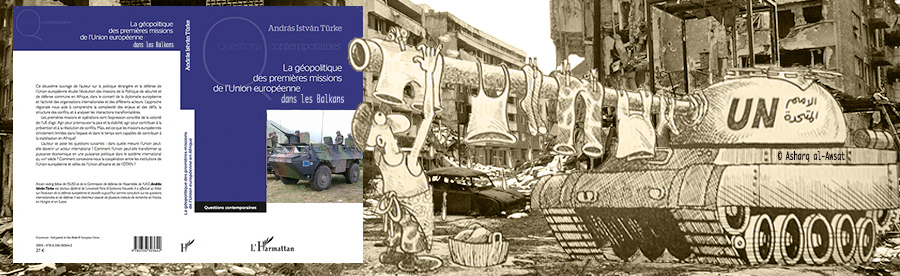
We are looking for sponsors for the English translation of these books, please contact turkeandras(at)gmail(dot)com